

Canada Tariffs News Update: What Changed and What to Watch in 2026
9 min read
The trade dispute between the United States and Canada has escalated through the summer and fall of 2026, fundamentally reshaping cross-border commerce and supply chains that Greater Toronto businesses and consumers have relied upon for decades. U.S. tariffs on a broad range of Canadian goods took effect August 22, followed by Canada’s proportional response targeting $27.6 billion in American imports across steel, dairy, appliances, agricultural equipment, pulp and paper, and electronics, which came into force September 8. The conflict now stands at a critical juncture as both nations await the implementation of punishing 50% tariffs on auto-sector goods scheduled for January 1, 2027, a move that threatens Ontario’s integrated manufacturing heartland.
For Toronto-area residents and businesses, these aren’t abstract policy maneuvers. Local manufacturers face disrupted supply chains and margin pressures, grocery prices have climbed on affected dairy and agricultural products, and the uncertainty has stalled investment decisions across sectors. The dispute emerged suddenly when President Trump announced the initial tariffs July 20, leaving Canadian officials and industry little time to prepare. While Ottawa’s counter-measures aim to pressure Washington toward negotiations, the looming auto tariffs represent an inflection point that could either force a resolution or deepen the economic pain on both sides of the border.
What Changed: The Timeline of U.S.-Canada Tariff Actions
The trade conflict between the United States and Canada escalated rapidly over six weeks in summer 2026, moving from initial announcements to implemented measures that now shape cross-border commerce. Understanding this timeline helps clarify how quickly the relationship deteriorated and where things stand today.
The sequence began July 20, 2026, when the U.S. formally announced sweeping tariffs on a broad range of Canadian goods. These weren’t idle threats. The measures took effect August 22, immediately impacting businesses on both sides of the border. Just two days later, on August 24, President Trump announced an additional 50% tariff specifically targeting the automotive sector, scheduled to take effect January 1, 2027.
Canada responded the next day. On August 25, the federal government announced dollar-for-dollar counter-tariffs totaling $27.6 billion on U.S. imports, targeting steel, dairy, appliances, agricultural equipment, pulp and paper, and electronics. Those retaliatory measures came into force September 8 and remain in effect today. The back-and-forth happened with unusual speed, leaving businesses little time to adjust supply chains or negotiate alternative arrangements before facing the new trade reality.
Key Developments in the 2026 Trade Dispute
1. U.S. Imposes Broad Tariffs on Canadian Goods
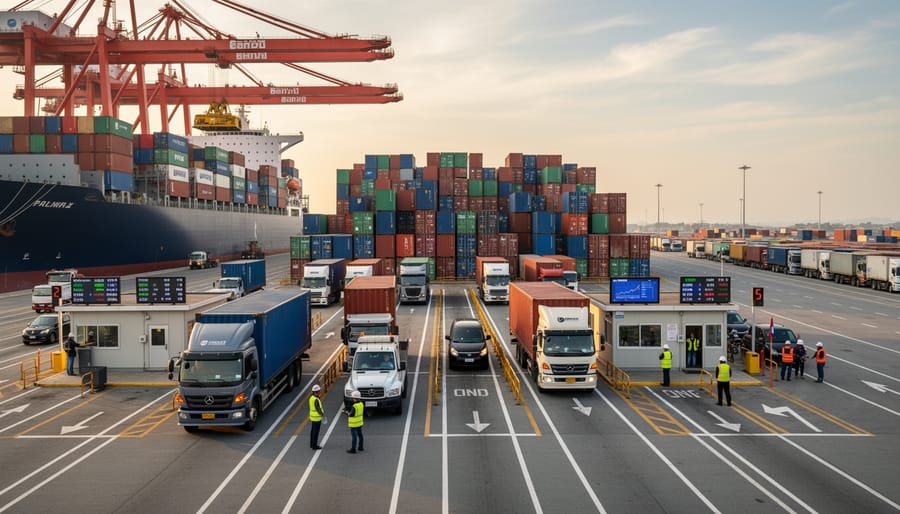
On August 22, 2026, the United States imposed tariffs on a broad range of Canadian goods, marking a significant escalation in cross-border trade tensions. The tariffs, which had been announced a month earlier on July 20, represented one of the most comprehensive trade actions between the two countries in recent decades.
The scope of these measures extended across multiple sectors of the Canadian economy. While the full list of affected products was substantial, the tariffs hit particularly hard in areas where Canadian exports to the U.S. market are most concentrated. Manufacturing sectors, natural resources, and consumer goods all faced new barriers to entry in the American market.
The Trump administration framed the tariffs as necessary to protect American industries and address what it characterized as long-standing trade imbalances. Officials cited concerns about competitiveness and domestic manufacturing capacity as primary justifications for the measures.
Market reactions were swift. The Canadian dollar weakened against its U.S. counterpart in the days following implementation, while stocks in affected sectors experienced volatility. Export-dependent industries faced immediate uncertainty about contracts and future orders.
The August tariffs set the stage for further escalation. Just two days later, on August 24, President Trump announced an additional 50% tariff targeting the auto industry, scheduled to take effect on January 1, 2027. This announcement signaled that the trade conflict would continue to intensify rather than stabilize, leaving Canadian businesses and workers bracing for ongoing disruption.
2. Trump Announces 50% Auto-Industry Tariff
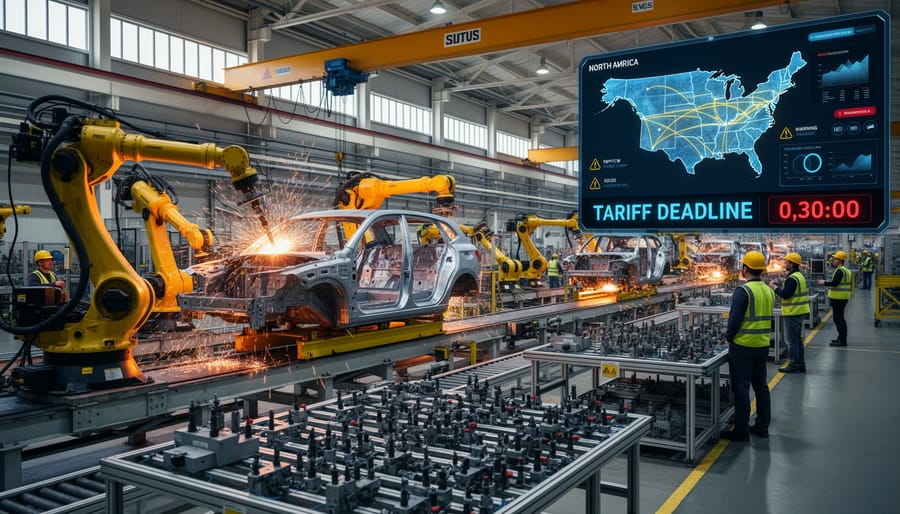
On August 24, 2026, just two days after the broad tariffs took effect, President Trump announced a targeted 50% tariff on automotive goods scheduled for January 1, 2027. The declaration escalated an already tense trade environment and sent ripples through an industry built on decades of cross-border integration.
The automotive sector represents the deepest level of economic interconnection between the U.S. and Canada. Components cross the border multiple times during production: an engine block might be cast in Ontario, machined in Michigan, assembled into a vehicle in Kentucky, then shipped back to Canadian dealerships. This integrated supply chain, refined since the 1965 Auto Pact and reinforced through NAFTA and USMCA, makes the automotive industry uniquely vulnerable to tariff disruption.
The timing proved strategic on multiple levels. Announcing the auto tariff separately, after the broader August 22 measures had already landed, kept automotive manufacturers in a state of uncertainty while providing the administration a distinct negotiating lever. The January deadline also creates pressure without immediate disruption, allowing time for negotiations while the threat looms.
For Ontario’s automotive corridor stretching from Windsor through Cambridge to Oshawa, the 50% rate represents an existential challenge. Auto parts manufactured in the region would face cost increases that could render them uncompetitive in U.S. markets. Assembly plants relying on U.S.-made components would see input costs surge. The integrated production model that defined North American automotive competitiveness for six decades suddenly faces a fundamental restructuring, with workers and communities caught in the balance.
3. Canada Retaliates with $27.6 Billion in Counter-Tariffs
Canada responded to the U.S. tariffs with a swift and calculated retaliation. On August 25, 2026, the federal government announced $27.6 billion in dollar-for-dollar counter-tariffs targeting specific U.S. goods and sectors. These measures weren’t a distant threat, the September 8 counter-tariffs have been in effect for nearly a month now, reshaping cross-border commerce between the two countries.
The Canadian government’s sector selection was strategic, not random. Steel products faced retaliatory duties, targeting a key American manufacturing input. Dairy imports, already a contentious issue in North American trade relations, saw new tariffs. Consumer goods like appliances hit middle-class American households directly. Agricultural equipment tariffs struck at U.S. farming states, while pulp and paper measures affected forestry-dependent regions. Electronics rounded out the list, touching supply chains that cross the border multiple times during production.
This targeted approach reflects lessons learned from previous trade disputes. Rather than broad, unfocused measures, Ottawa chose sectors with political and economic leverage, goods produced in states with significant congressional representation and industries where U.S. producers would feel immediate pressure. The steel tariffs, for instance, affect inputs that American manufacturers need but can’t easily replace domestically.
The counter-tariffs also served a domestic purpose. By matching the U.S. tariff total dollar-for-dollar at $27.6 billion, Canada signaled it wouldn’t absorb economic punishment passively. The message to Canadian businesses and workers was clear: the government would defend their interests while pushing for negotiated solutions. But with these measures now active and the January auto-tariff deadline approaching, both sides face mounting costs that make resolution increasingly urgent.
Why It Matters: Impact on Canadian Communities and Economy

The tariff measures now in force have concrete consequences for communities across Ontario, particularly in and around Toronto where the manufacturing sector forms a critical part of the regional economy. These aren’t abstract policy debates; they directly affect workers, businesses, and households navigating an already challenging economic environment.
The automotive sector faces the most immediate pressure. With U.S. tariffs already applied to Canadian goods and the 50% auto-industry tariff looming on January 1, 2027, manufacturers in southern Ontario must rethink supply chains built on decades of integrated cross-border production. Assembly plants, parts suppliers, and related service businesses all operate on tight margins where a sudden cost increase of this magnitude forces difficult decisions about production locations, employment levels, and capital investment.
Beyond automotive, Canada’s counter-tariffs implemented on September 8 have created reciprocal pain points. Steel producers and fabricators in Hamilton and the Greater Toronto Area now compete under different rules, while dairy operations, appliance manufacturers, and agricultural equipment dealers face retaliatory measures that disrupt established trade relationships. The pulp and paper industry, significant in northern Ontario, and electronics manufacturers concentrated in urban centers all navigate new cost structures and market uncertainties.
Several sectors and communities now face heightened economic pressure:
- Automotive assembly and parts manufacturing in the Greater Toronto and Hamilton Area
- Steel production and metal fabrication concentrated in Hamilton
- Appliance manufacturing and electronics production in southern Ontario
- Agricultural equipment dealers and dairy operations across rural communities
- Pulp and paper operations in northern Ontario towns dependent on U.S. export markets
Consumer prices have already begun shifting as importers and retailers absorb or pass along tariff costs. Groceries, household appliances, and vehicles all carry higher price tags, squeezing household budgets at a time when many families have little financial cushion. The uncertainty itself creates problems, as businesses delay hiring and expansion plans while waiting to see whether the trade conflict escalates, stabilizes, or resolves through negotiation.
What to Watch: Next Steps and Future Developments
The January 1, 2027 auto-tariff deadline represents the most immediate pressure point in this trade conflict. With the 50% rate set to hit integrated North American supply chains in less than three months, watch for any signals of negotiation or delay from Washington or Ottawa before year-end.
Beyond the calendar, monitor how businesses respond to the counter-tariffs now in effect since September 8. Local manufacturers and exporters will reveal through hiring decisions, investment plans, and supply-chain adjustments whether they view this as a temporary disruption or a fundamental shift in trade relations. Early indicators from Ontario’s automotive and steel sectors will be particularly telling.
Potential escalation remains a real risk. If the auto tariffs proceed as scheduled, Canada may announce additional counter-measures in early 2027. Conversely, any softening of rhetoric or back-channel talks could signal de-escalation, though concrete policy changes would likely unfold slowly.
For those directly affected, preparation matters more than prediction. Businesses exposed to cross-border trade should review contracts, explore alternative suppliers or markets, and assess currency hedging strategies. Workers in vulnerable sectors may want to stay updated locally on employment support programs and retraining initiatives as they emerge, while keeping tabs on broader economic shifts through reliable local news updates rather than relying solely on national coverage.
Understanding the Tariff Measures
What are tariffs and who actually pays them?
Tariffs are taxes imposed on imported goods, paid by the importing company when goods cross the border. While governments collect the tariff revenue, importers typically pass these costs on to businesses and consumers through higher prices.
Which Canadian goods face U.S. tariffs right now?
Since August 22, 2026, U.S. tariffs apply to a broad range of Canadian goods. A separate 50% tariff specifically targeting the auto industry is scheduled to take effect January 1, 2027.
What U.S. products are subject to Canadian counter-tariffs?
Canada’s counter-tariffs, which came into effect September 8, 2026, target $27.6 billion worth of U.S. imports including steel, dairy products, appliances, agricultural equipment, pulp and paper, and electronics. These measures were designed as dollar-for-dollar retaliation.
How can I stay informed as this situation develops?
Follow trusted news sources for updates on negotiations and policy changes. When reading coverage of the trade dispute, it helps to check media bias to understand different perspectives on the economic impact and political motivations.
For Canadian businesses directly affected by these measures, the immediate priority is understanding whether your imports or exports fall under the tariffed categories. Review your supply chains and consider diversifying suppliers where feasible. Companies importing affected U.S. goods should account for the additional costs now in effect since September, while exporters to the U.S. market need contingency plans if the auto tariffs proceed as scheduled. Consulting with customs brokers and trade lawyers can clarify your specific obligations and options under the current regime.
Consumers will likely see price increases on affected goods as businesses absorb or pass along tariff costs. The impact varies by sector, appliances and electronics targeted by Canada’s counter-tariffs may cost more, while the pending auto tariffs could significantly affect vehicle prices in 2027. Tracking these changes requires patience, as price adjustments often take weeks to filter through retail channels.
As of October 2026, the Canada-U.S. tariff conflict has fundamentally reshaped North American trade. With U.S. tariffs on Canadian goods active since August 22 and Canada’s $27.6 billion counter-tariffs now in effect following their September 8 implementation, both economies are already feeling the pressure. The looming January 1, 2027 deadline for the 50% auto-industry tariff adds further urgency to an already strained relationship.
The situation remains fluid, with potential for both escalation and negotiation. Toronto-area businesses, workers, and consumers need to stay informed as developments unfold. Raven News will continue monitoring this trade dispute closely, providing updates on policy changes, economic impacts, and what they mean for our communities. Understanding these shifting dynamics isn’t just about following headlines, it’s about preparing for real changes that affect jobs, prices, and the region’s economic future.