
Israel News Update: What Changed and What to Watch in 2026
9 min read
Recent developments in Israel have prompted urgent policy shifts in Canada and drawn sharp international responses, making verification of news sources more critical than ever for readers trying to separate fact from speculation.
On September 29, 2026, Canada opened a new pathway to permanent residency for Israeli and Palestinian nationals whose asylum claims were previously denied, marking a significant reversal in immigration policy. The change affects individuals who received final negative decisions between September 28, 2025 and September 29, 2026, allowing them to apply for pre-removal risk assessment regardless of their prior case outcomes. This represents one of the most substantial shifts in Canadian refugee policy in recent years, reflecting evolving assessments of regional stability.
Beyond immigration, Canada joined Norway in condemning Israel’s announcement of construction tenders for more than 1,200 housing units in disputed territories, signaling continued diplomatic friction. Meanwhile, a September 30 incident aboard a FlyDubai flight from the United Arab Emirates to Israel, in which a co-pilot allegedly stabbed the captain and attempted to crash the aircraft carrying approximately 170 passengers, has raised urgent questions about aviation security protocols.
For Toronto readers navigating these fast-moving developments, the challenge lies in distinguishing verified information from rumor and politically motivated narratives. Cross-referencing reports through media bias checkers and official government sources remains the most reliable approach to understanding how these events affect Canadian communities, from immigration processing timelines to regional diplomatic relations that shape trade and travel policies.
What Changed: Key Policy Shift
On September 29, 2026, Canada’s immigration ministry introduced a significant policy shift for individuals from Israel and Palestine who had exhausted their asylum options. The government opened a new avenue for permanent residency through the pre-removal risk assessment process, specifically targeting those who received final negative decisions between September 28, 2025 and September 29, 2026.
This change applies to three categories of applicants: those denied asylum claims, those refused on previous PRRA applications, and those who lost their cases at Federal Court during the specified timeframe. The IRCC PRRA eligibility window represents an unusual intervention, as immigration authorities rarely reopen closed cases for entire national groups.
The timing reflects Canada’s assessment of deteriorating conditions in the region. By creating this exception, federal officials acknowledged that circumstances changed materially enough to warrant reconsideration of previously rejected protection claims. Affected individuals who were facing removal now have an opportunity to present updated evidence about risks they would face upon return. The policy essentially pauses deportations for this group while allowing fresh evaluation of their circumstances under current conditions rather than outdated assessments.
Three Major Developments

1. New Immigration Pathway for Protected Persons
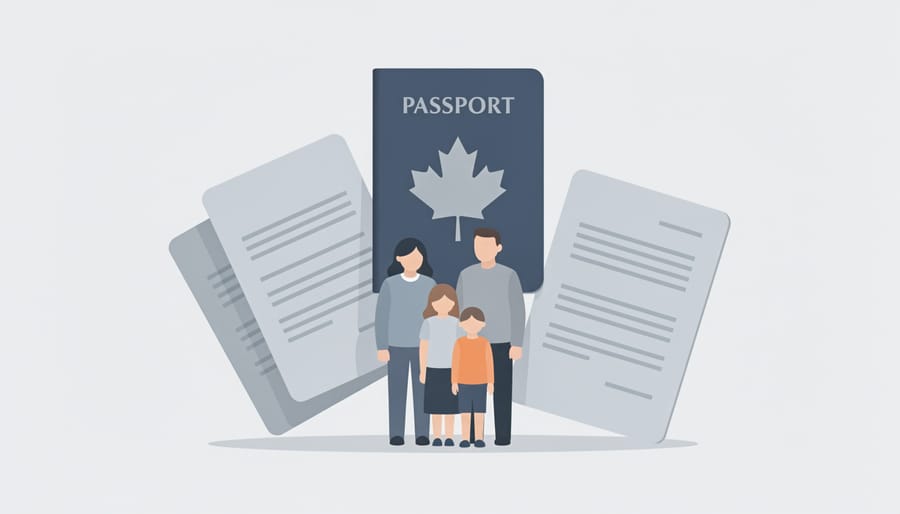
Canada’s September 29, 2026 decision represents a dramatic policy reversal for individuals who had exhausted their asylum options. The government now allows Israeli and Palestinian nationals, as well as former residents of these territories, to apply for a pre-removal risk assessment even after receiving final negative decisions. This change acknowledges the deteriorating security situation and provides a second chance for protection to people who might have faced deportation.
The eligibility window is narrow but significant. Who qualifies for PRRA under this new pathway includes individuals who meet specific criteria:
- Received a final negative decision on an asylum claim between September 28, 2025 and September 29, 2026
- Received a final negative decision on a previous PRRA application during the same period
- Had their Federal Court case decided negatively between those dates
- Hold or formerly held Israeli or Palestinian nationality or residency status
For Toronto’s substantial Israeli and Palestinian communities, this policy shift carries immediate practical weight. Families who thought their cases were closed now have a pathway forward. Immigration lawyers across the city are fielding calls from clients who were preparing to leave Canada or exploring other options. The decision reflects Ottawa’s assessment that conditions in the region have changed enough to warrant reconsideration of previous protection denials.
The timing matters. By setting the eligibility period from late September 2025 forward, Canada captures individuals whose claims were rejected before the most recent escalation but who now face demonstrably higher risk. This approach balances legal finality with humanitarian response, giving immigration officials the discretion to reassess cases in light of current conditions rather than circumstances that existed when the original decision was made.
2. Canada and Norway Challenge Settlement Expansion
Canada and Norway issued a forceful joint rebuke after Israel announced construction tenders for more than 1,200 housing units in contested territories. The Canada and Norway joint response characterized the move as incompatible with international law and an obstacle to peace. This diplomatic pushback marks a sharpening of Canada’s stance on settlement expansion, signaling that Ottawa will not remain silent when new construction threatens the viability of future negotiations.
The timing matters. Canada’s public criticism arrives as the federal government simultaneously opens new protection pathways for Israeli and Palestinian nationals through the September 29 immigration policy change. These parallel moves reveal a deliberate strategy: provide humanitarian relief to individuals caught in the conflict while maintaining diplomatic pressure on settlement policies that most of the international community views as violations of the Fourth Geneva Convention.
For Toronto’s substantial Israeli and Palestinian communities, Canada’s position carries direct relevance. Families with relatives in the region watch these diplomatic signals closely, understanding that Canada’s willingness to challenge settlement expansion reflects broader policy commitments. The joint statement with Norway strengthens Canada’s credibility as a balanced actor, neither silent on contentious issues nor reflexively aligned with any single party.
The bilateral relationship between Canada and Israel will likely absorb this friction without rupture. Ottawa has criticized settlement activity before while maintaining security cooperation and trade ties. Yet the escalating construction scale and Canada’s increasingly public objections suggest growing tension between Canadian foreign policy principles and Israel’s territorial actions. What remains uncertain is whether diplomatic criticism alone will influence settlement decisions or whether Canada will consider additional measures beyond statements.
3. Aviation Security Incident Raises Safety Concerns
On September 30, 2026, an alarming in-flight attack jolted aviation security concerns when the captain of a FlyDubai flight reported that his co-pilot stabbed him mid-flight and allegedly attempted to crash the aircraft. The flight, carrying approximately 170 passengers from the United Arab Emirates to Israel, became the scene of what Israel’s prime minister described as a potentially catastrophic security breach. According to the captain’s account, he regained control of the aircraft after the assault, understanding that the lives of everyone aboard depended on his ability to get back on his feet despite his injuries.
The incident raises immediate questions about crew vetting procedures and cockpit security protocols that affect all international flights, including routes commonly used by Canadian travelers. FlyDubai operates connections through Dubai that many Canadians use when traveling to Israel or other Middle Eastern destinations. While two-person cockpit rules exist specifically to prevent a single crew member from compromising flight safety, this attack exposed vulnerabilities in the safeguards meant to protect against internal threats. Investigators will need to determine how the co-pilot passed security screenings and whether warning signs were missed during the airline’s hiring and monitoring processes.
The broader implications extend beyond this single flight. Aviation authorities worldwide will likely review screening procedures for flight crew, particularly on routes serving regions experiencing heightened security tensions. The fact that the alleged attacker held a position of trust as a qualified pilot complicates traditional security approaches that focus primarily on passenger screening. This incident also adds another dimension to safety considerations for Canadians planning travel through UAE-Israel routes, which have grown since the Abraham Accords normalized relations between Israel and several Arab states.
For Toronto’s aviation security professionals and travelers alike, the attack underscores that threats can emerge from unexpected vectors. It will probably prompt Transport Canada and international aviation bodies to examine whether existing cockpit security measures adequately address insider threats, particularly on flights serving politically sensitive destinations. The investigation’s findings will shape crew security protocols across the industry in coming months.
Why It Matters to Canadians
These developments resonate deeply in Toronto, home to one of North America’s largest and most engaged Jewish communities and a growing Palestinian population. The September 29, 2026 immigration policy shift directly affects hundreds of families in the Greater Toronto Area who have been navigating uncertain legal status while the conflict intensified. Community organizations across the city report increased demand for legal clinics and mental health support as affected individuals process what this protection pathway means for their futures.
The aviation security incident raises immediate safety questions for the thousands of Canadians who travel through Middle Eastern flight corridors annually, particularly those with family ties requiring regular trips to the region. Toronto’s Pearson International Airport serves as a major connecting hub for these routes, making regional aviation security a local concern.
Canada’s diplomatic stance on settlement expansion signals a broader recalibration of Middle East policy that shapes how our government engages with regional partners and advocates for international law. For Toronto readers following Toronto breaking news this diplomatic positioning reflects the balancing act Canadian officials face when addressing a conflict that divides communities here at home.
The immigration decision represents a concrete example of Canada’s humanitarian protection framework responding to deteriorating conditions abroad. Unlike symbolic statements, this policy change creates tangible pathways for people who fled violence but initially received negative asylum decisions during a narrow window when conditions worsened. It demonstrates how Canadian immigration policy adapts to evolving crises, setting precedent for how future protection measures might unfold when regional conflicts escalate unexpectedly.
What to Watch Next
The PRRA application window for affected Israeli and Palestinian nationals opened September 29, 2026, and Immigration, Refugees and Citizenship Canada (IRCC) has not yet announced a closing date. Eligible individuals should monitor the IRCC website for processing timelines and documentation requirements, as application volumes will likely shape how quickly officials review cases.
Canada’s joint statement with Norway criticizing settlement expansion signals a hardening diplomatic stance. Watch whether Ottawa imposes measurable consequences, trade restrictions, visa policy changes, or coordinated multilateral pressure, or whether the statement remains symbolic. The settlement criticism may influence Canada’s voting patterns at the United Nations and reshape bilateral relations beyond rhetoric.
Aviation authorities in Canada, the UAE, and Israel will review security protocols following the September 30, 2026 FlyDubai incident. Expect enhanced cockpit access restrictions, crew psychological screening procedures, and potentially altered flight routes for carriers serving the region. Canadians traveling to or from Israel should stay informed through live alerts and tools that track safety advisories.
Where do I apply for the new PRRA opportunity?
Applications go through Immigration, Refugees and Citizenship Canada’s online portal. Check the IRCC website for the pre-removal risk assessment section and confirm your eligibility based on the September 28, 2025 to September 29, 2026 decision window.
How long will the PRRA process take?
IRCC has not released official timelines. Processing speed will depend on application volumes and case complexity.
Will Canada impose sanctions related to settlement construction?
Canada and Norway issued a joint statement but have not announced concrete measures. Monitor government announcements for policy developments beyond the diplomatic criticism.
These three developments, immigration policy, diplomatic positioning, and aviation security, reflect Canada’s evolving response to Middle East instability. The immigration pathway offers immediate relief for affected individuals in Toronto’s communities, while the diplomatic and security dimensions suggest Canada is recalibrating its regional engagement for 2026.