

The Free Press Media Bias: How Canadian Readers Can Spot Slant in the News They Follow
13 min read
Is The Free Press biased? No single verdict can answer that for you, and any outlet that hands you one deserves a second look. What you can do is judge slant yourself, using a repeatable method that takes about 15 minutes per outlet and needs nothing more than a few articles and a clear head.
Media bias is the pattern of choices a newsroom makes: which stories get covered, who gets quoted, which words frame the facts, and what gets left out. Every outlet makes those choices. The question is whether they’re made fairly and openly.
Canadian newsrooms set out their own standards, and they’re worth knowing. The Canadian Press, founded in 1917, says its news principles require being “honest, unbiased and unflinchingly fair,” and that it pursues all sides of a story with equal vigour. National Observer says its reporters should avoid bias in their dealings with sources and the public, and that it reports with fairness and accuracy. Those are stated promises. Your job as a reader is to check whether the coverage keeps them.
The sections below show you how, whether the outlet is The Free Press or anything else in your feed.
What Media Bias Means and Why ‘The Free Press Media Bias’ Keeps Being Searched

Bias, Opinion and Error: Three Things That Are Often Confused
Bias, opinion and error look alike on the page, but they are different things, and treating them as one leads to unfair verdicts.
Bias is a pattern. It shows up in which stories an outlet chooses, how it frames them, who it quotes and what it leaves out. One story rarely proves it. Opinion is openly a viewpoint. A column or editorial is meant to argue a position, so disliking its stance doesn’t make the outlet’s news reporting slanted. Error is simply a mistake, like a wrong figure or a misattributed quote. Honest outlets correct errors, and a single correction isn’t evidence of an agenda.
Confusing these has real costs. Call a strong column “bias” and you may dismiss sound reporting beside it. Treat one error as a pattern and you condemn an outlet unfairly. Treat a pattern as an isolated mistake and you miss genuine slant. Ask first what kind of thing you’re looking at.
Why a Single Label Rarely Tells the Whole Story
A one-word verdict like “left” or “right” is tidy, but it compresses a lot into very little. An outlet is not one thing. It runs straight news, analysis, columns and headlines, and each can lean differently. A label also hides the time dimension: coverage shifts across years, editors and news cycles, so a tag applied once may not describe what you read today.
Labels also invite a kind of shortcut. If you already believe an outlet is slanted, you will tend to notice the stories that confirm it and skim past the ones that don’t. The label ends up doing your reading for you.
That is why method matters more than reputation. Rather than asking where an outlet sits on a spectrum, ask whether a particular story gives you demonstrable facts, reliable sourcing and a fair hearing for the people involved. The Canadian Press, for one, says it pursues all sides of a story with equal vigour. That is a standard you can test on any article, from any outlet, without trusting anyone’s tag.
Treat a label, if you find one, as a prompt for questions rather than a conclusion. Then go and check the work itself.
What Canadian Newsrooms Say About Fairness: Key Details From Their Own Standards

Before judging any outlet’s slant, it helps to know what newsrooms promise their readers. Published standards are stated commitments, not proof of performance, but they give you a yardstick to measure coverage against.
The Canadian Press, which says it was founded in 1917 describes itself as Canada’s No. 1 source for news in French and English. It says its news principles of honesty require reporting that is “honest, unbiased and unflinchingly fair.” It also says it deals with facts that are demonstrable and supported by reliable and responsible sources, and that it pursues all sides of a story with equal vigour.
The Canadian Press adds a point about reach. It says many Canadians get news from social media, smartphones or all-news television channels, and that much of that information comes from The Canadian Press. If that’s accurate, the standards of a wire service can shape what you read even when its name isn’t on the page.
National Observer frames its commitments around conduct. It says its news reporters should avoid bias and report fairly in their interactions with sources and members of the public, and that it reports the news responsibly with fairness and accuracy.
Here’s how those statements translate into things you can actually test:
| Outlet | What it says about fairness | What a reader can check against it |
|---|---|---|
| The Canadian Press | News principles require being “honest, unbiased and unflinchingly fair” | Whether stories read as even-handed in tone and word choice |
| The Canadian Press | Facts are demonstrable and supported by reliable and responsible sources | Whether claims name sources you can verify |
| The Canadian Press | Pursues all sides of a story with equal vigour | Whether opposing viewpoints get comparable space and seriousness |
| National Observer | Reporters should avoid bias in interactions with sources and the public; reports with fairness and accuracy | Whether sourcing and quotations appear fair and accurate |
None of this tells you whether an outlet lives up to its words. It tells you what to look for. A claim of equal vigour, for instance, invites you to count whose voices appear and how much room each gets. A promise of demonstrable facts invites you to follow the sourcing trail.
This approach also keeps the question fair. Rather than asking whether an outlet “feels” slanted, you hold its coverage to a standard it set for itself, then compare what you find across other outlets.
Who Can Fairly Assess an Outlet? Understanding Media Bias Charts and Their Limits
A media bias chart is a visual shortcut. It plots news outlets on a grid, usually with one axis for political lean (left to right) and another for reliability or factual quality. A reader glances at where an outlet lands and gets a quick impression. That’s the appeal, and it’s also the risk.
Not all charts work the same way. Some rely on a small panel of editors who read sample articles and score them. Others survey readers about how they perceive an outlet, and some blend both approaches. Each method has strengths, but none produces a measurement in the way a thermometer does. A rating is a judgment, shaped by who did the judging, what they read and how they defined “bias” in the first place.
So when a chart places The Free Press, or any outlet, in a particular spot, ask a few practical questions. Who made the rating? How many articles were reviewed, and over what period? Were news stories separated from opinion pieces? Is the scoring process explained clearly enough that you could repeat it? If a chart can’t answer these, treat its placement with caution.
Toronto-area readers who want to explore this further can look at how media bias checkers are built and used, and at how a media bias chart can shift as its methods are updated.
The healthiest approach is to treat a chart as one input among several. Pair it with your own reading, comparison coverage from other outlets and the standards each newsroom publishes about itself.
Who Can Reasonably Judge Bias: Eligibility Requirements for a Fair Assessment
Judging an outlet’s slant is less about credentials than about preparation. Anyone can do it fairly, but only after meeting a few practical conditions. Skip them, and you’re measuring your reaction to a headline rather than the outlet’s record.
Here’s what a credible assessment needs:
- A meaningful sample of stories, not one article or a viral clip.
- A clear line between straight news reporting and commentary or opinion.
- Comparison coverage of the same events from several other outlets.
- Evidence from a transparent method rather than a bare verdict.
- Honest awareness of your own leanings and a willingness to test them.
The last item is the hardest. If every story you dislike looks biased and every story you like looks balanced, the problem may be your lens. Try this: before you decide, ask what evidence would change your mind.
The sources you lean on matter just as much. Credible evidence usually shows its work. It names its sources, explains how conclusions were reached, and points to published standards. Canadian newsrooms offer useful examples. The Canadian Press says it deals with facts that are demonstrable and supported by reliable and responsible sources. National Observer says its reporters should avoid bias in dealings with sources and the public. Statements like these give you something concrete to check coverage against.
Look, too, for a visible corrections policy. An outlet that admits and fixes errors is easier to assess than one that quietly edits or ignores them.
A note of caution: a stated standard is a commitment, not proof of performance. Treat it as a yardstick, then do the measuring yourself.
How to Check an Outlet for Slant: A Step-by-Step Process You Can Complete in an Afternoon
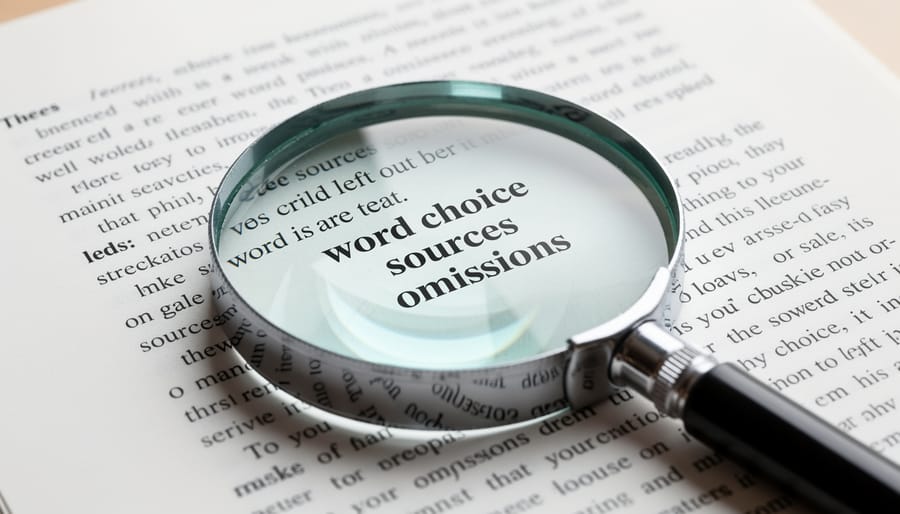
You can run a fair check on any outlet, The Free Press included, in an afternoon. Here’s a method that works the same way each time.
Step one: sort reporting from opinion. Before judging anything, work out what you’re reading. A news report should rest on demonstrable facts and named sources. A column or essay is allowed to argue. Judging an opinion piece by the standard of a news story is the most common mistake readers make.
Step two: read the same story elsewhere. Pick one story and find how two or three other outlets handled it. Note what each leads with, what it treats as context, and what it leaves out entirely.
Step three: check who is quoted and who is missing. The Canadian Press says it pursues all sides of a story with equal vigour. Use that as your benchmark. Ask who gets a full quote, who gets a paraphrase, and whose perspective never appears at all. Silence is often more revealing than word choice.
Step four: compare headline and body. A headline that promises more than the article delivers is worth flagging. Check whether the body supports the claim or quietly softens it.
Step five: note loaded language. Watch for emotive adjectives, scare quotes, and verbs that imply motive (“admitted,” “slammed,” “claimed”). One instance means little. A steady pattern means something.
Step six: look for corrections and standards. A trustworthy outlet publishes a standards statement and visibly corrects its mistakes. National Observer, for example, says it aims to report with fairness and accuracy. Check whether the outlet you’re testing says something comparable, and whether it acts on it.
Step seven: tally across a sample. Don’t judge on one article. Read ten or so and keep a simple tally: how often sources are balanced, how often the language leans, how often the outlet corrects itself. Patterns are evidence, and single stories are anecdotes.
A Toronto-area exercise. Pick a municipal or regional story you already know something about and compare coverage across outlets. Service changes work well. Try following TTC disruptions as reported in three places, and see who speaks to riders, who speaks to officials, and who simply repeats a press release. Because you can check the details against your own commute, it’s an easy way to calibrate your instincts. The same habit applies to local info tracking where you can compare what different sources say against what you observe yourself.
Keep your notes. After a few rounds, your own evidence will tell you more than any one-word label could.
Your Rights and Responsibilities as a Reader of the News
Readers hold some reasonable expectations of the outlets they follow. News should be clearly separated from opinion, so you know when you are reading a report and when you are reading a viewpoint. Errors should be corrected openly, not quietly deleted. Standards should be published, which is what The Canadian Press does when it says its principles require being “honest, unbiased and unflinchingly fair.” And there should be some way to raise a concern when something looks wrong.
The obligations run both ways. Reading past the headline is the first one, since headlines compress a story and often lose nuance. Disagreeing with a story is not the same as proving bias, so ask whether a claim is inaccurate or simply unwelcome. And be careful with screenshots and clipped posts, which strip away the context that gives a sentence its meaning.
That care matters more because of how people actually get their news. The Canadian Press notes that many Canadians receive news through social media, smartphones or all-news television channels, and that much of what they see traces back to its own reporting. When a claim reaches you secondhand, go back to the original piece before judging the outlet or passing it on. For fast-moving local situations, a set of local alerts tools can point you to primary sources rather than relayed summaries.
Think of it as a fair exchange. Newsrooms owe you transparency, and you owe them, and your neighbours, a little diligence.
Where to Get Help: Raising a Concern or Building Better News Habits

If you think an outlet has got something wrong, or you simply want to read the news more critically, start with the source itself. Most reputable newsrooms publish the standards they say they follow. The Canadian Press, for example, says its principles require being “honest, unbiased and unflinchingly fair,” and National Observer says it reports with fairness and accuracy. Those statements give you a yardstick, and a specific complaint tied to a stated standard is far more likely to be taken seriously than a general sense that a story feels slanted.
A few general avenues are worth trying:
- The outlet’s own standards page, to see what it commits to in writing.
- Its corrections channel or contact page, to report a specific factual error.
- Any complaints or ombudsperson process the outlet itself describes, if one exists.
- Library media-literacy resources, which are often free to use.
- Community discussion groups where neighbours compare how they read the same coverage.
Be precise when you write in. Quote the passage, explain what you think is inaccurate or missing, and say what evidence you checked. Keep your expectations realistic, too, since not every outlet offers a formal complaints process.
For building better habits, look closer to home. Toronto-area readers can check with their local library about workshops or programs on evaluating news, and community groups are a good place to test your reading against other people’s. Talking through a story with someone who sees it differently often shows you more than rereading it alone.
Frequently Asked Questions About The Free Press Media Bias
Is The Free Press biased?
This article does not issue a verdict, because a fair answer depends on reading a broad sample of the outlet’s work, not on a single label. Use the step-by-step method above: separate reporting from opinion, compare the same story across outlets, and look for patterns over time.
How can Canadian readers spot slant in the outlets they follow?
Check who is quoted and who is missing, compare headline wording with the body of the story, and note loaded language. Then repeat the exercise across several stories before drawing a conclusion. A Toronto reader might start with a municipal story covered by two or three different outlets.
What do major Canadian media organisations say about objectivity, impartiality and social media use?
The Canadian Press says its news principles require being “honest, unbiased and unflinchingly fair,” and that it pursues all sides of a story with equal vigour. It also notes that many Canadians get news from social media, smartphones or all-news television, and that much of that information comes from The Canadian Press. National Observer says its reporters should avoid bias in their interactions with sources and members of the public, and that it reports the news responsibly with fairness and accuracy. These are stated commitments, which readers can use as yardsticks rather than as proof of performance.
What are media bias charts and how do they rate news sources?
Media bias charts plot outlets on scales such as political lean and reliability, usually based on editorial review, reader surveys or a mix of both. Methods differ between chart makers, so ratings are judgments rather than measurements. Check how a chart reaches its conclusions before relying on it.
Taken together, these answers point to the same habit: treat any single verdict with caution, and let your own careful reading do the work.
So, is The Free Press biased? The most useful answer isn’t a label. It’s a method you can run yourself, and you now have one.
Start with the benchmarks outlets set for themselves. The Canadian Press says its principles require being “honest, unbiased and unflinchingly fair,” and that it pursues all sides of a story with equal vigour. National Observer says its reporters should avoid bias in dealings with sources and the public. Those stated standards are a yardstick, and you’re entitled to hold any outlet against it.
Then do the work that beats a snap judgment. Compare the same story across several outlets, read a sample of coverage rather than one headline, and keep news and commentary apart in your mind.
For Toronto-area readers, that habit pays off on a city council vote and on a distant conflict alike. Stay sceptical, but stay fair, and keep testing the sources you trust. The best ones will hold up.